
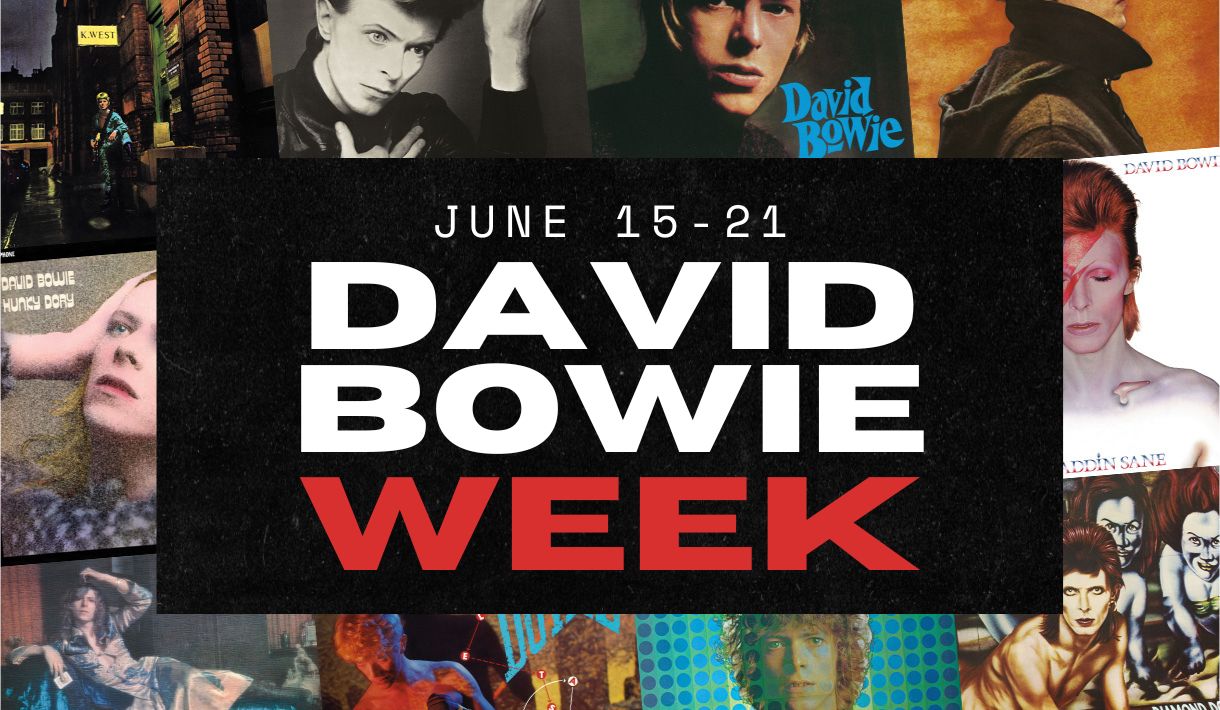
David Bowie
June 15, 2026 9:01 amFew artists in human history have influenced culture, music, and fashion quite like David Bowie. He wasn’t just a singer-songwriter; he was a musical chameleon, a sci-fi icon, and a master of reinvention. From his humble beginnings in post-war London to his final, poetic parting gift to the world, Bowie spent half a century rewriting the rulebook of popular music.
Here is a look back at the extraordinary history of the man who fell to Earth.
1. Ground Control to David Jones (1947–1969)
Long before he was an alien superstar, he was David Robert Jones, born in Brixton, London, on January 8, 1947.
As a teenager, he fell in love with jazz, picked up the saxophone, and cycled through various mod and rock bands. However, there was a practical problem: a young man named Davy Jones was already topping the charts with The Monkees. To avoid confusion, David rebranded himself after the American pioneer James Bowie and his famous knife. David Bowie was born.
Success didn’t happen overnight. He endured years of failed singles and mismatched concepts until 1969, when he struck gold. Timed perfectly with the Apollo 11 moon landing, “Space Oddity” introduced the world to Major Tom and rocketed Bowie into the UK top five.
2. The Golden Era of the Alter Ego (1972–1979)
If the late ’60s gave Bowie a foot in the door, the 1970s allowed him to kick the door down and redesign the room. Bowie realized that he didn’t just have to sing songs—he could play characters.
- Ziggy Stardust (1972): Donning fiery red hair, makeup, and outrageous costumes, Bowie became Ziggy, an androgynous, Martian rock star. The album The Rise and Fall of Ziggy Stardust and the Spiders from Mars defined the glam rock era and made him a global superstar.
- The Thin White Duke (1975–1976): Shedding the glitter, Bowie pivoted to a slick, hollow-eyed, cabaret-style persona for the Station to Station era, leaning heavily into funk and “plastic soul” (which gave us his first US number-one hit, “Fame”).
- The Berlin Trilogy (1977–1979): Seeking to escape the pressures of fame and substance abuse, Bowie moved to West Berlin. Collaborating with Brian Eno, he produced three avant-garde, electronic-infused albums: Low, “Heroes”, and Lodger. The title track of “Heroes” remains one of the most powerful anthems in rock history.
3. Let’s Dance: The Pop Megastar (1980s)
In the 1980s, Bowie shed the avant-garde shadows and stepped into the neon spotlight of mainstream pop.
With the 1983 release of Let’s Dance, co-produced by Nile Rodgers, Bowie traded his experimental edge for massive, stadium-shaking hooks. Hits like “Modern Love,” “China Girl,” and the title track introduced him to a brand-new generation of MTV-watching fans. This decade also cemented his status as a cult acting icon, thanks to his unforgettable performance as Jareth the Goblin King in the 1986 fantasy film Labyrinth.
4. The Final Masterpiece (1990s–2016)
The later decades of Bowie’s career saw him experimenting with everything from industrial rock to drum ‘n’ bass. He refused to look backward, always hunting for the next sonic frontier.
After a quiet decade following a health scare in 2004, Bowie surprised the world in 2013 by dropping The Next Day out of nowhere. But his most stunning act of showmanship was yet to come.
On January 8, 2016—his 69th birthday—Bowie released Blackstar, a haunting, jazz-infused masterpiece. Just two days later, on January 10, he passed away from liver cancer. The world realized that Bowie had turned his own mortality into final, breathtaking art.
“I don’t know where I’m going from here, but I promise it won’t be boring.”
— David Bowie
Categorised in: Artist of the Week
This post was written by Blackburn Radio